

Control and eradication of allochthonous tortoises from Lake Angitola
Share
Lake Angitola represents one of the most naturalistically valuable wetland ecosystems in Calabria and the Serre Regional Nature Park area. Set within the Regional Nature Reserve of the same name, the lake is home to a rich biodiversity and is a key area for numerous species of birds, amphibians and reptiles related to aquatic environments.
Historically, native species found in the area’s wetland environments included the European marsh tortoise (Emys orbicularis), a protected species typical of the lacustrine and marshy areas of southern Italy. Emys orbicularis is considered an important indicator of good environmental quality and balance of aquatic ecosystems, but in recent decades its populations have suffered a sharp decline, partly due to the spread of invasive allochthonous species.
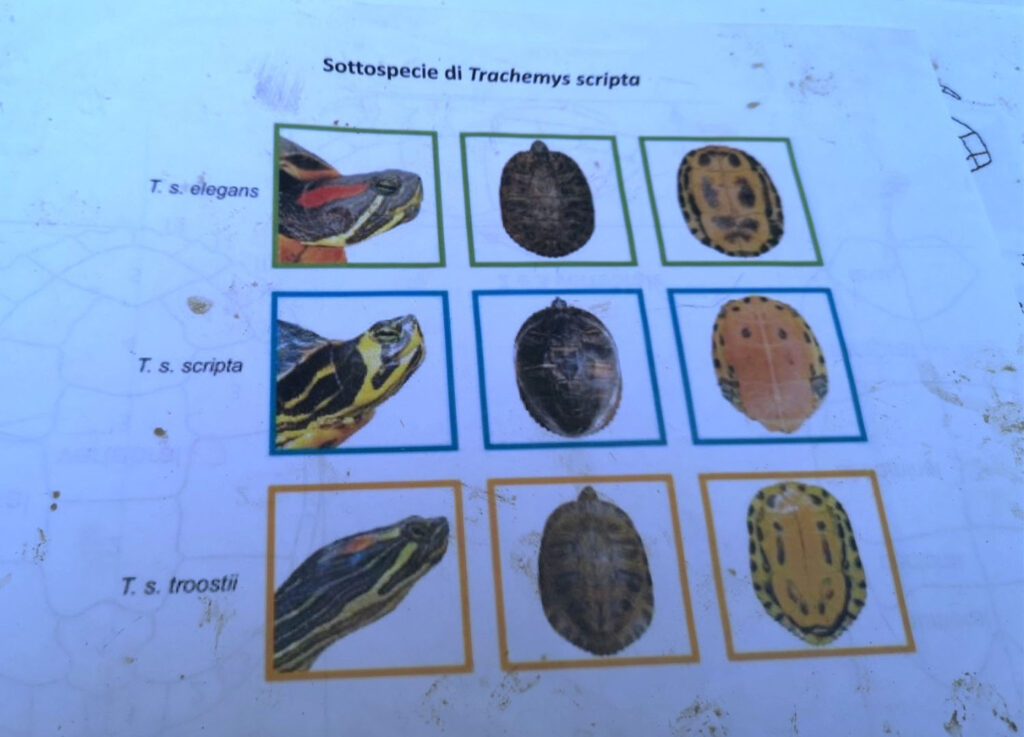
Among them, a particularly problematic role is played by tortoises of the genus Trachemys, in particular Trachemys scripta and its subspecies (T. scripta elegans, T. scripta scripta e T. scripta troostii). Native to North America, these tortoises have been introduced into our environments primarily as a result of voluntary releases of specimens held as pets. Once released into the wild, the Trachemys have proven to be extremely adaptable, able to survive and reproduce even in environments other than their native ones.
The main problem related to the presence of Trachemys in Lake Angitola is their high competitiveness. This is a voracious and opportunistic species that feeds on a wide range of aquatic organisms and competes directly with native fauna for food, basking sites (areas where tortoises expose themselves to the sun for thermoregulation), and breeding areas. This competition severely penalizes Emys orbicularis and can also have negative effects on amphibians and other small aquatic vertebrates.
An additional risk is the ability of these invasive tortoises to expand their range, moving up streams and colonizing new natural wetland environments. This also poses a real threat to other Serre Park ecosystems, such as those in the Serra San Bruno area, home to vulnerable native species, including newts, salamanders and other amphibians of high conservation value.
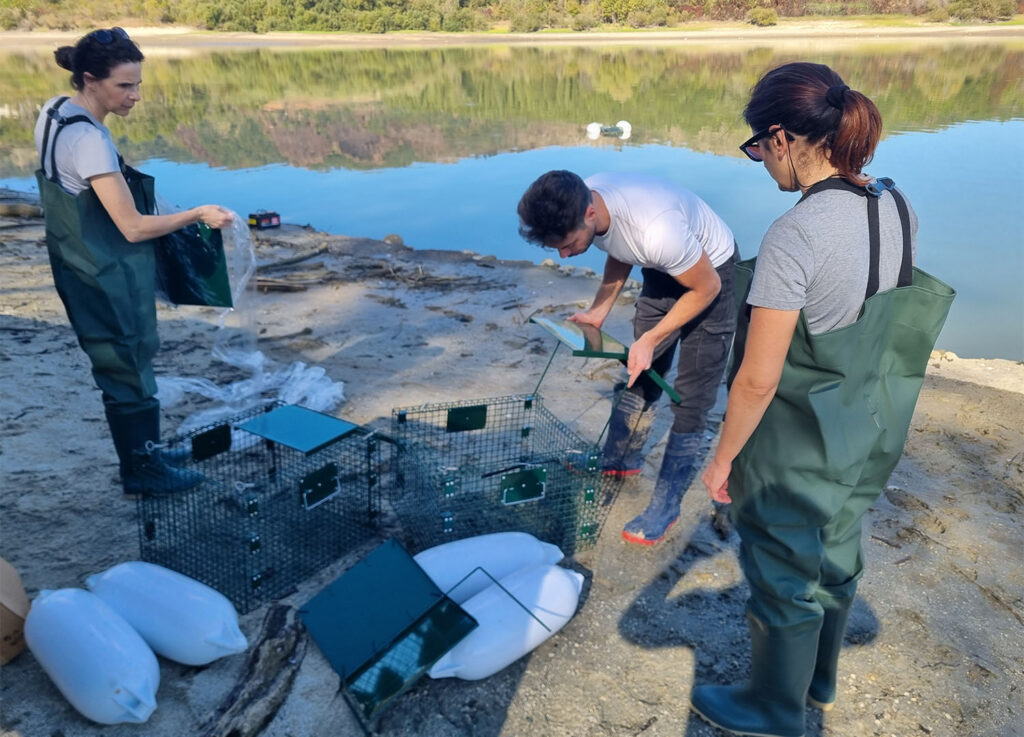
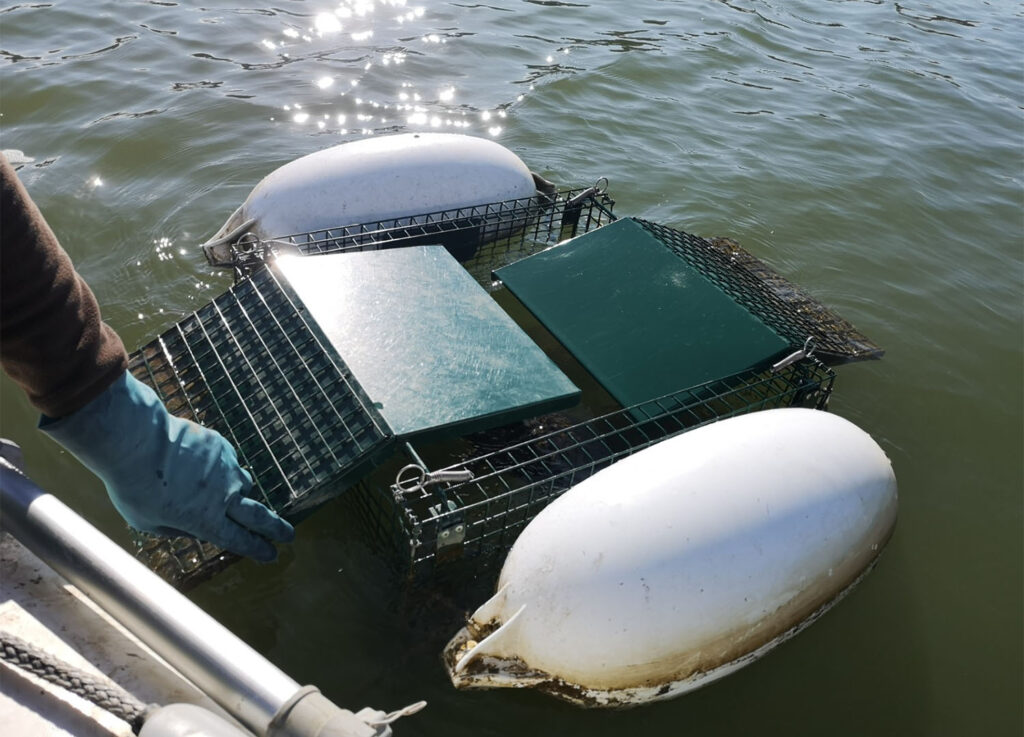
To counter this threat, the Serre Park Authority has initiated a project for monitoring and controlled extirpation of tortoises of the genus Trachemys from Lake Angitola, developed in collaboration with the DIBEST – Department of Biology, Ecology and Earth Sciences of the University of Calabria., whose scientific support contributes to the methodological setting of the activities and the reading of the data collected in the field. The activities involve the use of selective traps specially designed for the capture of invasive tortoises. These are metal mesh structures equipped with side ramps: the tortoises climb up the ramps to expose themselves to the sun and, once they pass the balance point, fall inside the trap with no possibility of exit. This system allows for effective and safe trapping while minimizing disturbance to other species in the lake.
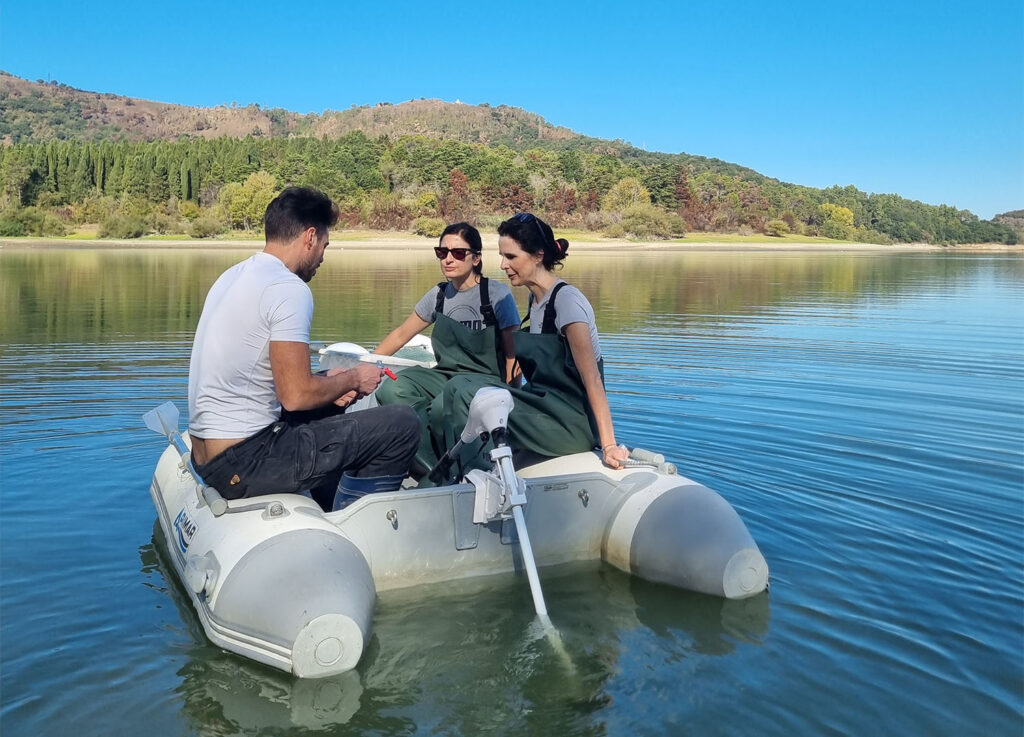
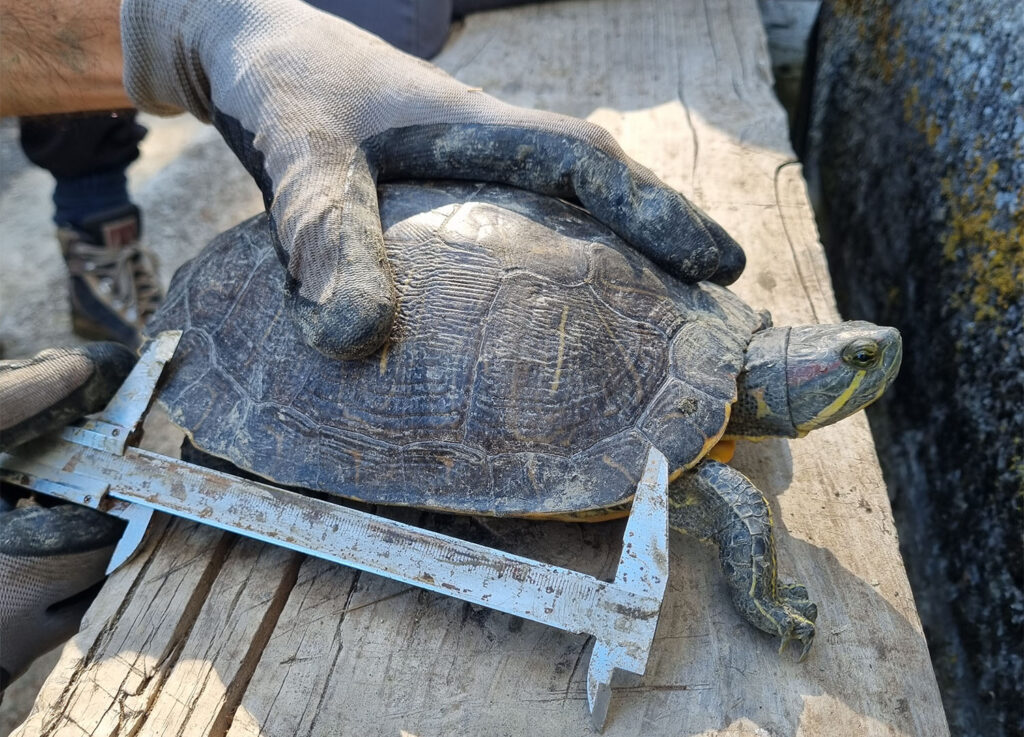
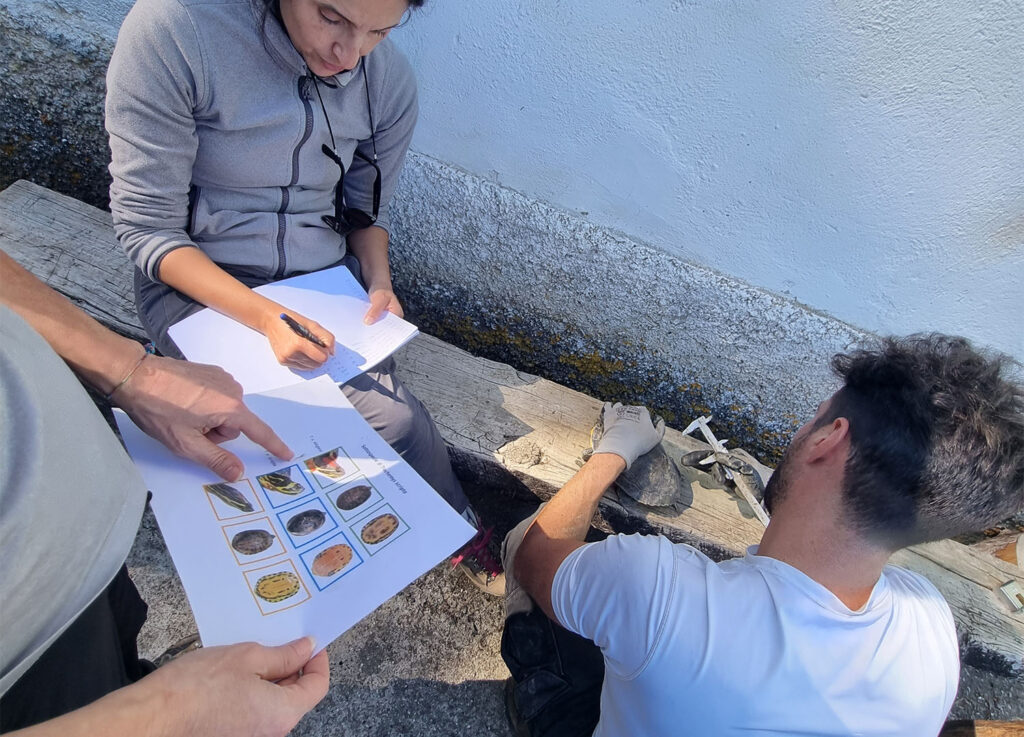
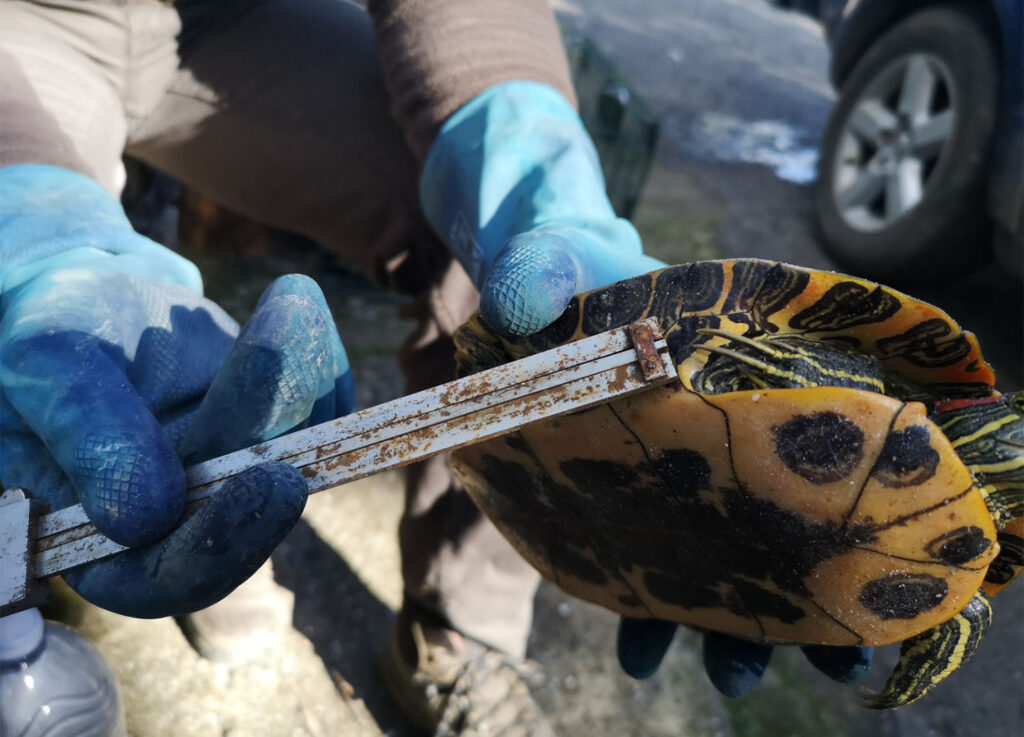
During monitoring operations, carried out also with the help of light boats, the captured specimens are identified, measured and catalogued, collecting useful data on the structure of the invasive population present in the lake. Also in this context, the collaboration with DIBEST of the University of Calabria takes on a relevant role, both for the support of scientific analysis activities and for the ecological framing of the intervention within biodiversity conservation strategies. On one of the first days of activities, only specimens of Trachemys scripta elegans, confirming the strong presence of this subspecies in the basin.
The extirpation project is part of a broader strategy to protect the biodiversity of Lake Angitola and the Park’s wetlands. The goal is to gradually reduce the pressure exerted by invasive species, encouraging the recovery of natural ecological balances. In the future perspective, and after careful monitoring of environmental conditions, the possibility of promoting the return of the European marsh tortoise (Emys orbicularis), a native species symbolic of Italian lake ecosystems.
Through the control of invasive alien species, the support of scientific research and the enhancement of native fauna, Serre Park confirms its commitment to the conservation of natural ecosystems and the protection of biodiversity, contributing to the preservation of one of Calabria’s most precious environmental heritages.