
Man's footprints in the Serre Park
This exclusive calendar collects the most beautiful of the images participating in the “Footsteps of Man” photo contest, promoted in 2025 by Mangiatorella and the Serre Park and telling the story of the park’s wonderful territory by privileging the profound relationship between man and nature. From month to month, in fact, you will discover archaeological vestiges, traces of settlements, rural architecture and scenes of life related to mountains, water and forest and more.
Mangiatorella and the Serre Park share a mission, which lies in the enhancement and protection of a great heritage that is not only naturalistic. A mission that Mangiatorella obeys with utmost commitment, since it is in the woods of Stilo, in the heart of the park, that its water gushes out in all its purity.


Share
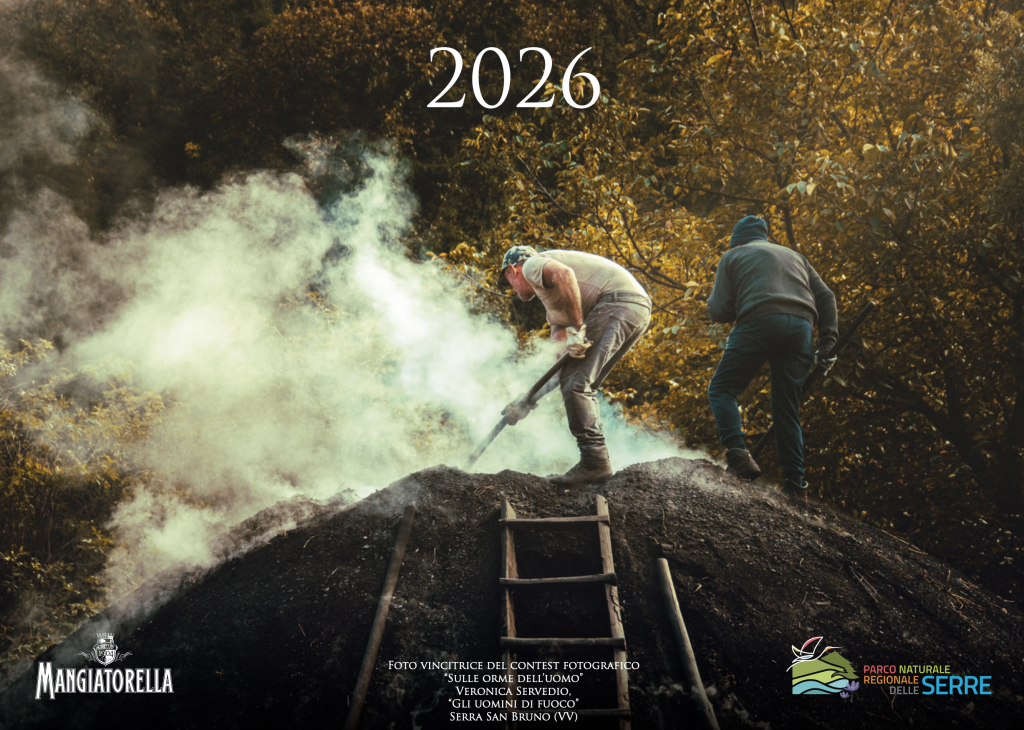
Veronica Servedio
"The Men of Fire" - Serra San Bruno (VV)
In the heart of the woods of Serra San Bruno, for centuries, the charcoal burner’s trade represented one of the oldest and most respected arts in the mountains. They were men who knew the forest intimately, its breaths, its humidity, the direction of the winds. Theirs was a wisdom that was not learned in books, but in their eyes and hands: knowing how to choose the right tree, how to cut it at the right time, how to build the charcoal pile with slow and precise gestures, how to control the fire so that it did not blaze, but burned over time, steadily and measuredly.
The charcoal pile, or furnace, was a mountain of wood covered with earth and leaves, which burned for days, without a living flame, turning wood into charcoal through slow and controlled combustion. The charcoal burners kept vigil day and night, in silence, in the dim light of the brazier. Fire was not a danger, but a companion to be respected: a living force with which to converse.
This image recounts one of the oldest arts of the Serre: the work of the charcoal burners, custodians of the forest and connoisseurs of fire. For centuries, in the mountains of Serra San Bruno, coal production was a fundamental practice for the life of local communities and for the development of the Bourbon foundries in Mongiana. It was not a simple craft, but a refined knowledge: choosing the wood, building the charcoal pile, governing the fire without letting it explode. An art handed down slowly, quietly, with respect for the mountain. Charcoal burners were not loggers: they were guardians of nature’s rhythm. They knew that the forest gives, but demands measure. They recognized that forest time does not coincide with human time. Their presence was, for centuries, a form of balanced coexistence between work and the environment.
Motivation of the jury
The photograph was chosen as the winner of the contest because it succeeds in synthesizing the heart of the theme Man’s Footprints in Nature in a single glance: it shows the relationship between man and the elements, highlights the value of ancient craftsmanship and celebrates a tradition that has shaped the cultural identity of the Greenhouses. The light of fire on the face of the charcoal burners becomes a human sign, a living memory and a responsibility to the landscape.This image does not merely document a craft: it restores it in its dignity and deep connection to the land.

Alfonso Nicola Coroniti
"The curves of Mrs. Nature" - Serra San Bruno (VV).
Serra San Bruno grew up around the Carthusian monastery founded by Saint Bruno in the late 11th century. The town developed slowly, in constant dialogue with the forest that surrounds it. The forests have been a source of wood, silence, work and prayer.
The road through the snowy mountain does not impose a direction: it follows the folds of the earth, interpreting them. Here nature is a guide and teacher.
The man proceeds with respectful step, aware that the mountain is not to be conquered but recognized. Winter, with its silence, reminds one of monastic sobriety: what is valuable is what remains.
Motivation of the jury
The photograph shows the human passage into the mountain without altering it. The road follows the curves
natural snowy landscape, testifying to a relationship of respect and measure between man and the environment.
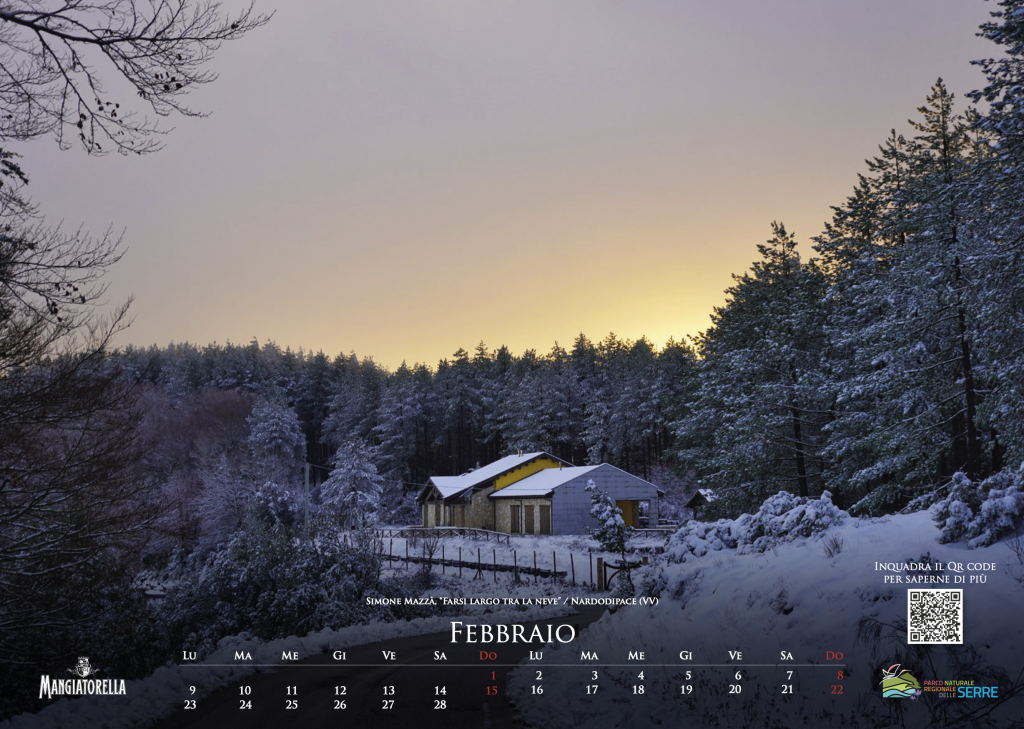
Simone Mazzà
"Making their way through the snow" - Nardodipace (VV).
Nardodipace is one of the highest centers of the Serre and preserves pastoral traditions and ancient relationships with the Arbëreshë and Grecan communities of the Ionian area. Its origins are linked to pastures, transhumance, and mountain trails.
When snow covers everything, every step becomes slow and necessary. The mountain offers no shortcuts: it invites measure.
Those who advance in the snow renew the tradition of those who, for centuries, have walked among these peaks to bring salt, wool, wood, stories. Nature here does not isolate. It purifies.
Motivation of the jury
The image restores the fatigue and dignity of walking in the snow, recalling the ancient routes of transhumance: man traverses nature without dominating it, recognizing its strength and rhythm.
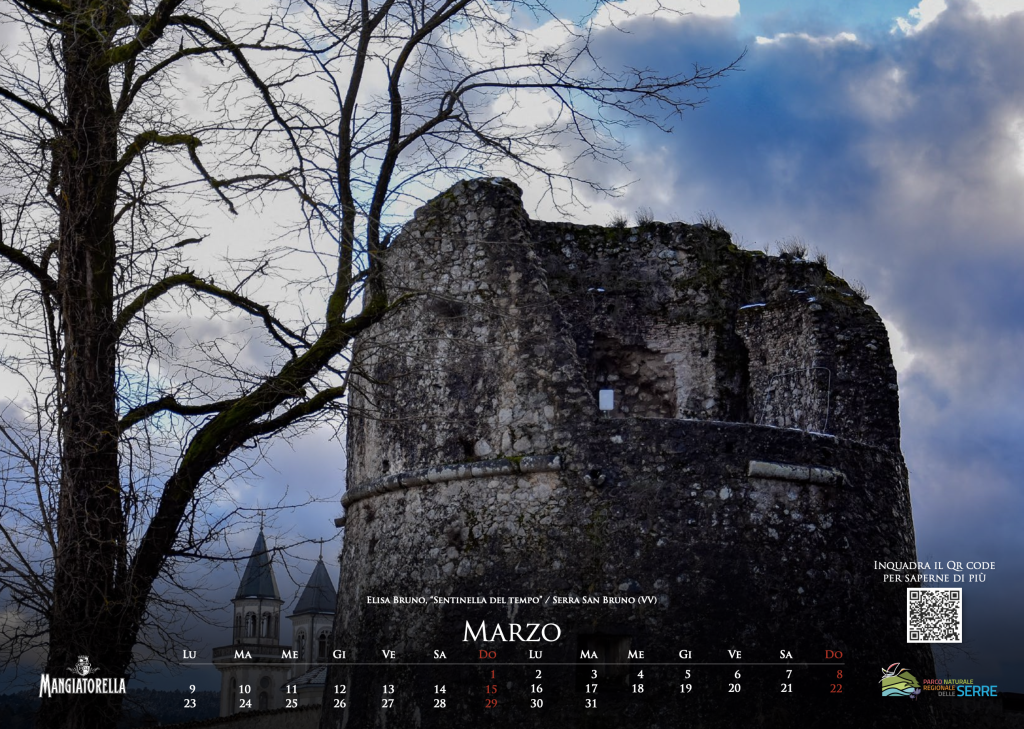
Elisa Bruno
"Sentinel of Time" - Certosa Tower, Serra San Bruno (VV).
The Charterhouse of Serra San Bruno is one of the few Carthusian monasteries still active in Europe. It was founded in the 11th century and became a center of silent spirituality, careful work, and custodianship of the forest.
The tower, now isolated, is what remains of an articulated complex, with vegetable gardens, workshops, prayer places. It is memory in stone of the Carthusian choice: to seek God in silence and nature.
The tower does not dominate the forest. It coexists with it.
It is the footprint of man when his presence does not hurt but bears witness.
Motivation of the jury
The tower of the Charterhouse emerges as a living memory of the encounter between spirituality and forest. The photo enhances the footprint of man who does not injure nature, but listens to it and guards it.
Mario Luciano Vilardo
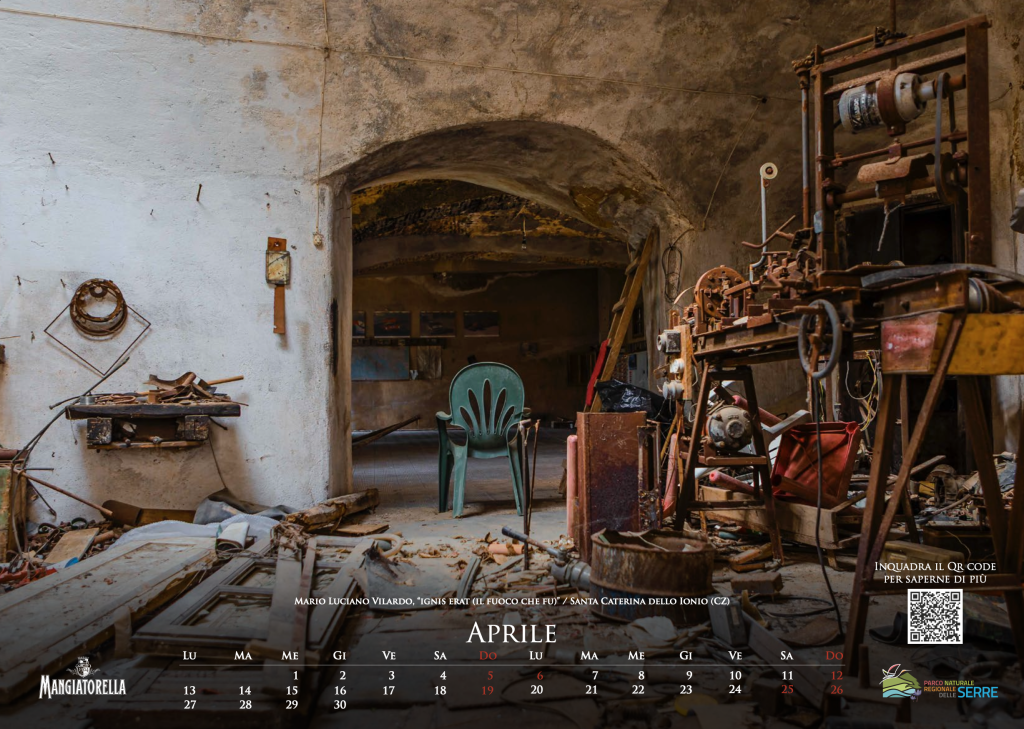
"Ignis erat (the fire that was)" - Santa Caterina dello Ionio (CZ).
This room belonged to the ground floor of an old building in the village, once used as a craft workshop. The lathe, files, axes and tools tell the story of those who worked with wood and metal to repair and build what the rural community needed: doors, fixtures, wheels, agricultural tools.
Here fire was not destruction, but energy to transform matter. The workshop was the place where the forest became form, where the earth found daily use, where ingenuity relieved toil.
The image restores the dignity of slow and precise work, in which man measured himself against nature without waste or pretension.
Motivation of the jury
The photograph interprets the theme Footprints of Man in Nature by showing the workshop as a place where forest matter and human labor meet. It bears witness to an ancient knowledge that does not exploit nature, but accompanies it, transforming it with respect and measure.
Pierluigi Rottura
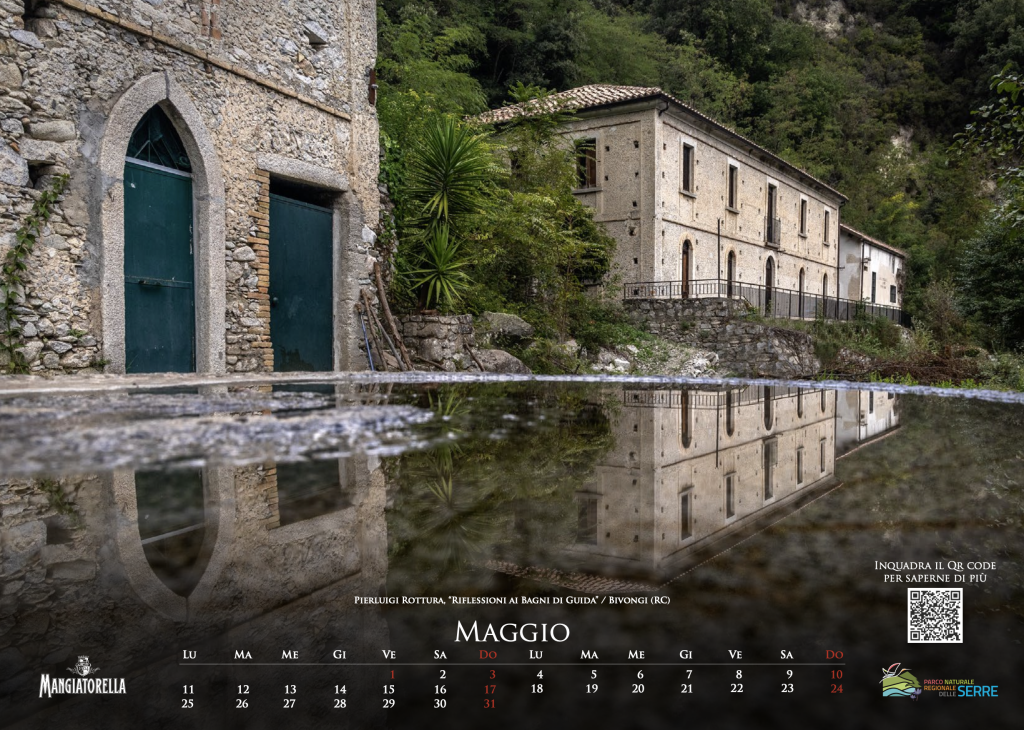
"Reflections at the Baths of Guidance" - Bivongi (RC)
Bivongi holds one of the oldest monastic presences in the South: St. John Theristis, a monastery linked to the Byzantine tradition. Here spirituality does not come from above as a prescription, but from below, as an exercise in living.
The Guide Baths are known for their therapeutic waters, which have always been considered capable of alleviating and pacifying.
The water, mirroring the face, invites truth.
Nature heals when man enters into relationship with it without pretense.
Motivation of the jury
The water mirror of the Guide Baths tells a harmonious relationship between nature and care. The image emphasizes the landscape’s ability to restore balance to those who respect it.
Stefania Platì
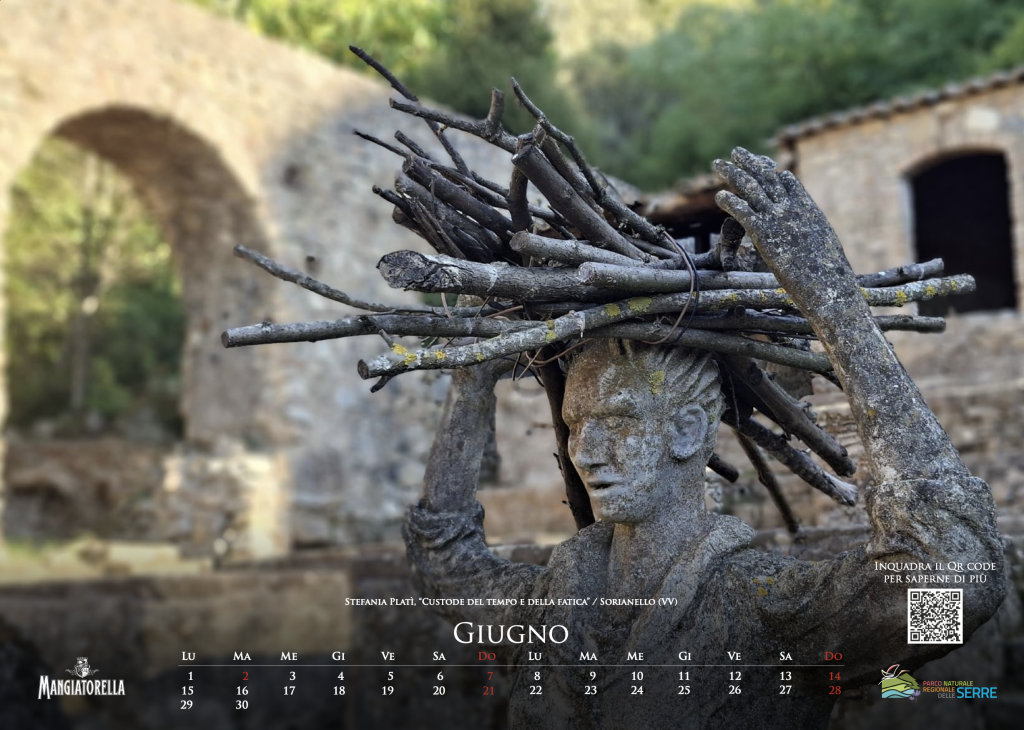
"Keeper of Time and Effort" - Sorianello (VV)
Sorianello has deep agricultural roots. Its slopes have been tamed with dry stone walls, made without cement, only with stones chosen, laid, listened to.This technique, now recognized as intangible heritage, tells of a way of experiencing the land: not extracting it, but accompanying it.
Here man did not want to change the mountain: he learned to stand by it.
Effort becomes culture. The earth reciprocates.
Motivation of the jury
The dry stone wall represents human intervention that does not impose, but accompanies the mountain. The manual work becomes a testimony to an ancient and sustainable coexistence.
Maria Rattà
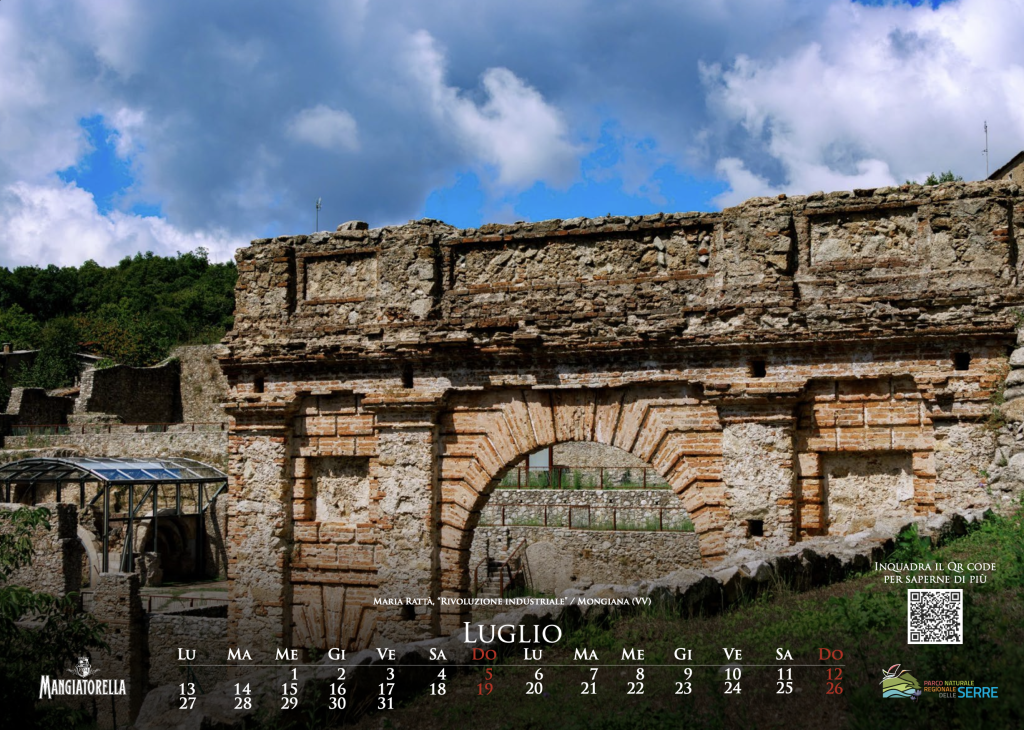
"Industrial Revolution" - Mongiana (VV).
Mongiana was the steel capital of the Bourbon Kingdom. Workshops, foundries, forestry yards, and schools of mechanical arts were born here.
The industrial revolution, in this place, did not erase the forest: it regulated it, studied it, respected it. The forest was not a resource to be consumed, but an asset to be cared for.
Today nature has taken back what man had built.
Not as revenge, but as an embrace.
It is possible to remember without relapsing.
Motivation of the jury
Industrial architecture nestled in the forest shows how history and nature can coexist. The photo interprets the past as a shared heritage, not a wound in the landscape.
Guido Calogero
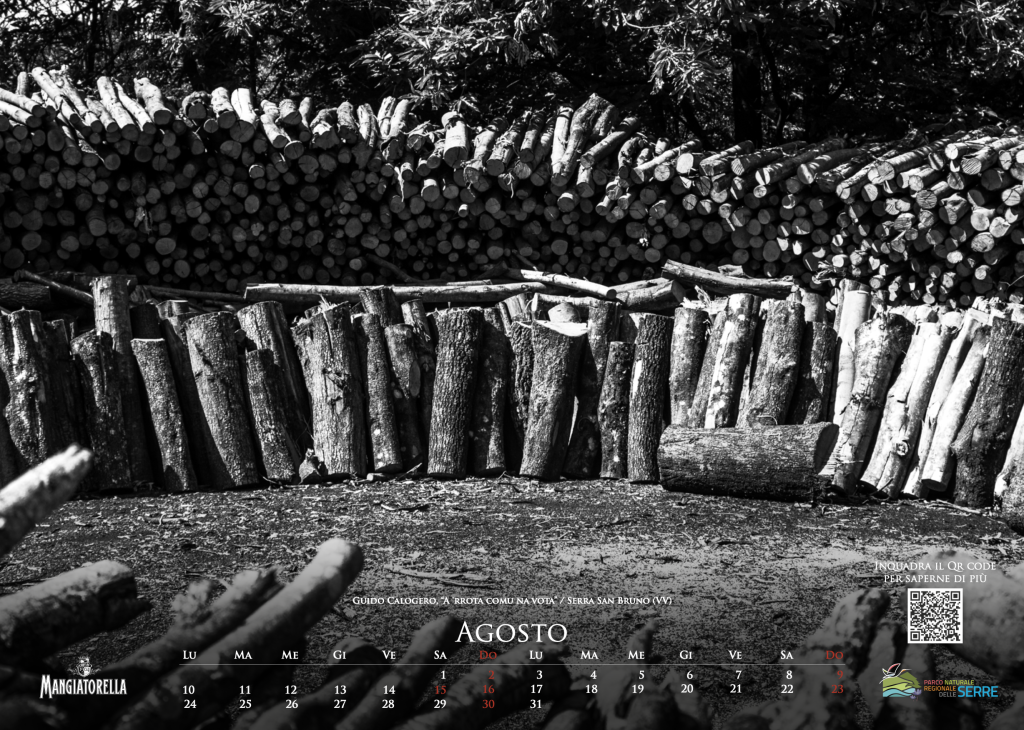
"A 'rrota comu na vota" - Serra San Bruno (VV)
Serra San Bruno is also a land of wood craftsmen. For centuries, the forest has offered valuable essences: fir, chestnut, holm oak.
The wheel is not object. It is knowledge: choice of tree, seasoning, right stroke of the hand, waiting time.
Here tradition is not folklore, but silent, familial transmission.
What is born from the forest returns to it, without waste and without injury.
Motivation of the jury
The wooden wheel is a symbol of craft knowledge rooted in the land. The image celebrates the silent transmission of skills that arise from nature and return to her.

Eustacchio Montemurno
"'i jànchi e 'i russi - traces of land" - Gerocarne (VV)
Gerocarne is historically the center of Calabrian domestic pottery. Red and white clay was molded into everyday utensils: jugs, pitchers, bowls.
Not objects of adornment, but companions in life.
The potter listens to the earth before even touching it.
Nature becomes form because man agrees not to impose himself, but to dialogue.
Beauty is born out of necessity.
Motivation of the jury
Molded clay becomes a concrete sign of the union between the earth and the human hand. The photo tells of a tradition that does not exploit nature, but interprets it with respect and sensitivity.
Francis Sgura
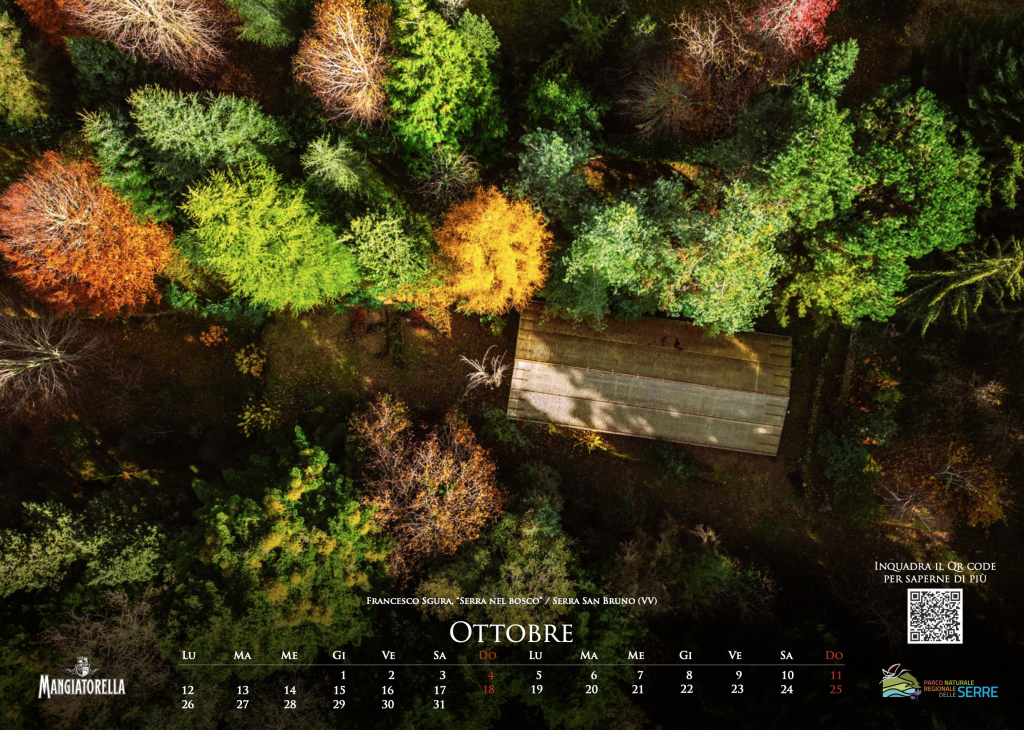
"Greenhouse in the Woods" - Serra San Bruno (VV).
Nowhere else is the man-nature relationship so evident. Here the forest is not periphery. It is center.
Houses are built respecting slopes and brightness. The streets follow the water.
Carthusian spirituality has taught that silence is not emptiness: it is presence.
Living in Serra means learning, every day, the grammar of essentials.
Motivation of the jury
The village nestled in the forest shows a possible balance between human settlement and landscape. The photograph makes visible a centuries-old coexistence based on measurement.
Marika Romeo
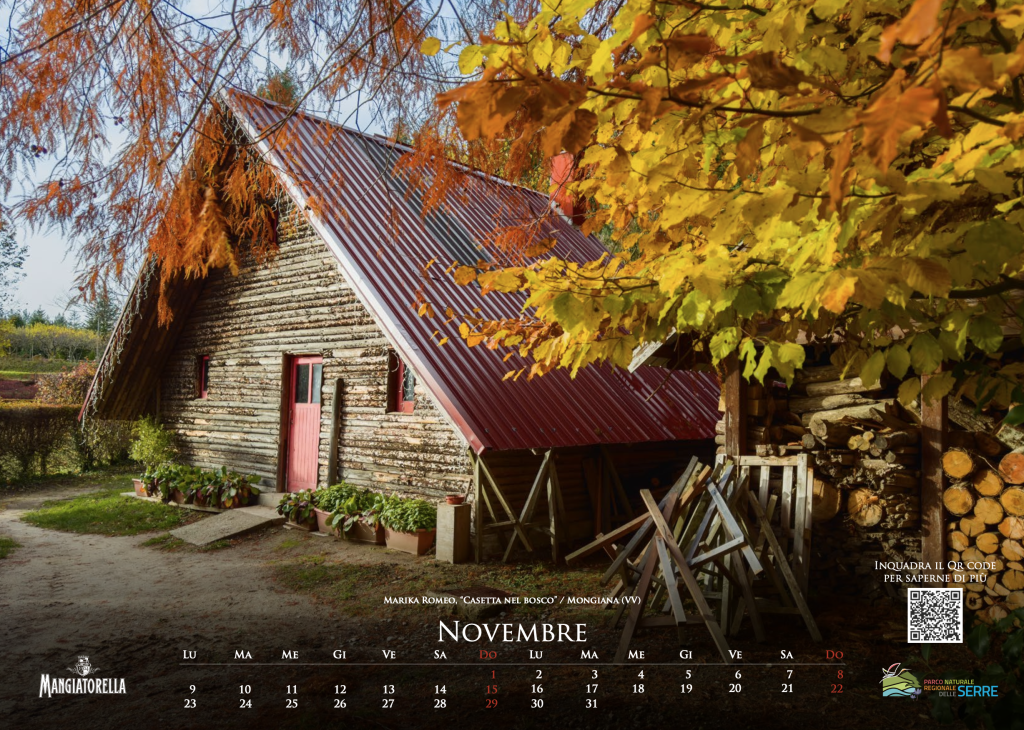
"Little house in the woods" - Mongiana (VV)
In the woods of Mongiana, small houses served the woodcutters as temporary shelter. They were places of fire, rest and thought.
Today they appear as calls for simplicity: what is needed is little, and what is little is often true.
Nature does not isolate. It brings together.
Those who enter it find themselves.
Motivation of the jury
The small house in the woods recalls the simplicity of loggers’ shelters. The image invites recognition of the value of nature as a space for shelter, listening, and a return to the essentials.
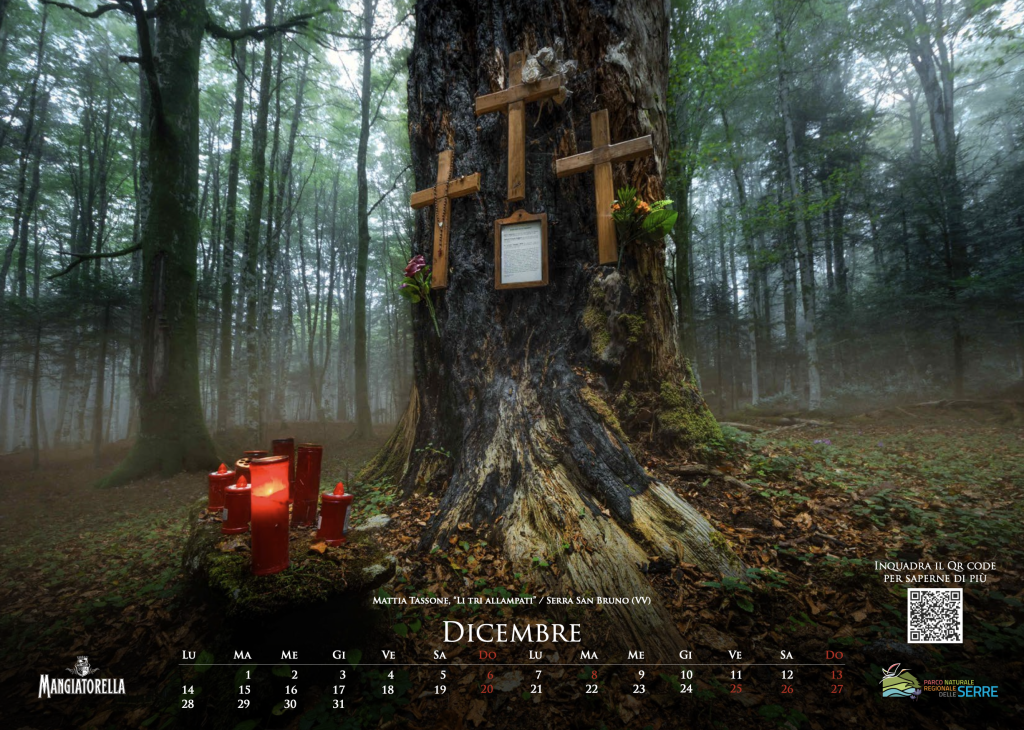
Mattia Tassone
"Li tri allampati" - Serra San Bruno (VV)
The slender trees soaring toward the sky tell more than just the landscape: they are witnesses of time, roots and ascents. Their shapes recall the place known as “Li tri allampati,” a memory of an incident that occurred in 1916, when three woodcutters were struck by lightning while seeking shelter under a large tree. The incident has remained alive in oral tradition and in the crosses laid on the trunk: a humble and profound sign of the bond between the community and the forest.This image speaks not only of nature, but of memory: roots that hold, momentum that opens, lives guarded by the forest.
Motivation of the jury
The photograph interprets the theme Man’s Footprints in Nature by relating the natural environment and community memory. Tree silhouettes evoke a true history of the land and show how the landscape can preserve and pass on the memory of the lives that have passed through it.